List: The 20th Centrury's Greatest Hits by American Book Review

A Passage to India
Except for the Marabar caves--and they are twenty miles off--the city of Chrandrapore presents nothing extraordinary.
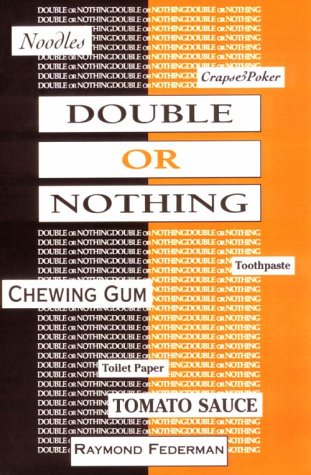
Double or Nothing
Once upon a time two or three weeks ago, a rather stubborn and determined middle-aged man decided to record for posterity, exactly as it happened, word by word and step by step, the story of another man for indeed what is great in man is that he is a bridge and not a goal, a somewhat paranoiac fellow unmarried, unattached, and quite irresponsible, who had decided to lock himself in a room a furnished room with a private bath, cooking facilities, a bed, a table, and at least one chair, in New York City, for a year 365 days to be precise, to write the story of another person—a shy young man about of 19 years old—who, after the war the Second World War, had come to America the land of opportunities from France under the sponsorship of his uncle—a journalist, fluent in five languages—who himself had come to America from Europe Poland it seems, though this was not clearly established sometime during the war after a series of rather gruesome adventures, and who, at the end of the war, wrote to the father his cousin by marriage of the young man whom he considered as a nephew, curious to know if he the father and his family had survived the German occupation, and indeed was deeply saddened to learn, in a letter from the young man—a long and touching letter written in English, not by the young man, however, who did not know a damn word of English, but by a good friend of his who had studied English in school—that his parents both his father and mother and his two sisters one older and the other younger than he had been deported they were Jewish to a German concentration camp Auschwitz probably and never returned, no doubt having been exterminated deliberately X * X * X * X, and that, therefore, the young man who was now an orphan, a displaced person, who, during the war, had managed to escape deportation by working very hard on a farm in Southern France, would be happy and grateful to be given the opportunity to come to America that great country he had heard so much about and yet knew so little about to start a new life, possibly go to school, learn a trade, and become a good, loyal citizen.
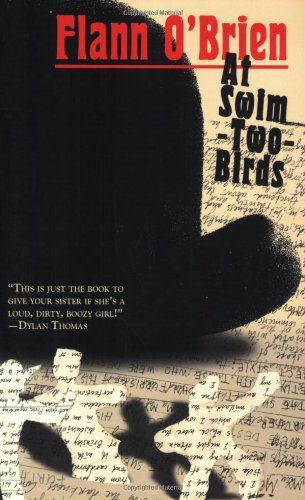
At Swim-Two-Birds
Having placed in my mouth sufficient bread for three minutes' chewing, I withdrew my powers of sensual perception and retired into the privacy of my mind my eyes and face assuming a vacant and preoccupied expression.



Native Son
Brrrrrrriiiiiiiiiiiiiiiiiinng! An alarm clock clanged in the dark and silent room.
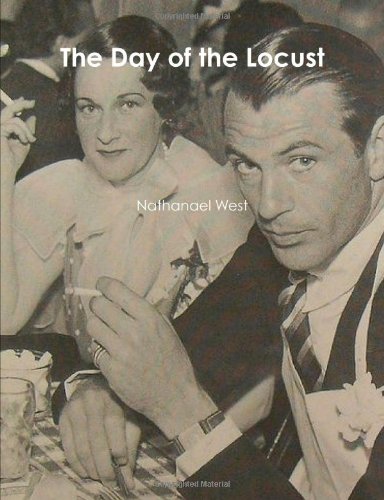
The Day of the Locust
Around quitting time, Tod Hackett heard a great din on the road outside his office.

Nightwood
Early in 1880, in spite of a well-founded suspicion as to the advisability of perpetuating that race which has the sanction of the Lord and the disapproval of the people, Hedvig Volkbein—a Viennese woman of great strength and military beauty, lying upon a canopied bed of a rich spectacular crimson, the valance stamped with the bifurcated wings of the House of Hapsburg, the feather coverlet an envelope of satin on which, in massive and tarnished gold threads, stood the Volkbein arms—gave birth, at the age of forty-five, to an only child, a son, seven days after her physician predicted that she would be taken.

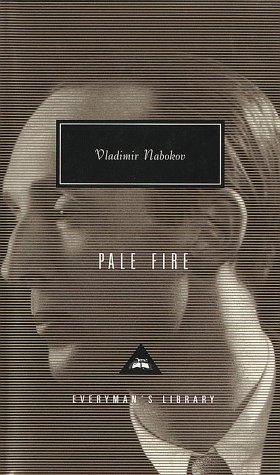
Pale Fire
I was the shadow of the waxwing slain / By the false azure in the windowpane.<i>Pale Fire</i>, a poem in heroic couplets, of nine hundred ninety-nine lines, divided into four cantos, was composed by John Francis Shade (born July 5, 1898, died July 21, 1959) during the last twenty days of his life, at his residence in New Wye, Appalachia, U.S.A.
🏆 Hall of Fame
Top rankings worldwide


